
Sustainable Chicago
If you're having trouble viewing this email, you may see it online.
Share This:  | ||||||||||||||||
| . Got this as a forward? Sign up to receive our future emails. |


CAT May Add 9,000 Jobs Worldwide
Good News

Peoria, Illinois-based Caterpillar Inc., the world’s largest construction-equipment maker, said last month it may add as many as 9,000 workers worldwide this year as sales climb in developing markets. Caterpillar shares have risen more than 50 percent in the past year.
OctoberFest Peoria
Be sure to visit the Heritage tent Oktoberfest 2010 Entertainment Schedule Gateway Building Accordianist - Terry Bredenberg 5:00-7:00 p.m. - Ratskeller Brummers in the fountain area ‘NEW to Oktoberfest in 2010! Our friends from Autohaus of Peoria have teamed with us and will add an 8-car display to this year’s festival. Autohaus’ display will feature authentic German-made cars -- Audi, Volkswagen, Mercedes-Benz, and Porsche! AND… Have you ever dreamt of going to Germany?! Autohaus of Peoria will be giving away a free trip to Germany, so make sure to sign up at the event!’ Friday, September 17 Main Stage 5:00-6:00 p.m. — die Spitzbuam6:00-6:20 p.m. — Peoria Volkstänzer 6:20-7:20 p.m. — die Spitzbuam 7:20-7:30 p.m. — Armkraft Wettkampf - Arm Strength Contest 7:30-7:50 p.m. — Oktoberfest Ceremony 7:50-8:40 p.m. — Alpen Echoes 8:40-9:00 p.m. — Lindenhof Echoes Alphorns 9:00-9:45 p.m. — Alpen Echoes 9:45-10:00 p.m. — Log Sawing Contest for Finalists 10:00-11:00 p.m. — Alpen Echoes Log-Sawing Tryouts 8:30-9:30 in the Main Tent Biergarten 5:00-7:30 p.m. — Vogel Musik 7:30-10:00 p.m. — Obenheimer Express CEFCU Stage - Oompah Free Zone 8:00 p.m. — Captain Rat and the Blind Rivets Saturday, September 18 Find OBENHEIMER EXPRESS on Myspace Click Here. Main Stage Log-Sawing Tryouts 5:30-6:15 in the Main Tent12:00-1:00 p.m. — Heidelberg German Band 1:00-1:30 p.m. — Peoria Volkstaenzer 1:30-2:20 p.m. — Heidelberg German Band 2:20-2:40 p.m. — Lindenhof Echoes Alphorns 2:40-3:30 p.m. — Heidelberg German Band 3:30-4:15 p.m. — Springfield International Dancers 4:15-5:00 p.m. — Obenheimer Express 5:00-5:30 p.m. — Oktoberfest Ceremony 5:30-6:15 p.m. — Obenheimer Express 6:15-6:30 p.m. — Log Sawing Contest 6:30-7:30 p.m. — Obenheimer Express 7:30-8:00 p.m. — Lindenhof Echoes / Ladies Stein Carrying Contest 8:00-8:45 p.m. — Alpen Echoes 8:45-9:00 p.m. — Armkraft Wettkampf - Arm Strength Contest 9:00-9:45 p.m. — Alpen Echoes 9:45-10:00 p.m. — Hammerer Contest 10:00-11:00 p.m. — Alpen Echoes Biergarten 12:00-2:00 p.m. — Vogel Musik 2:00-4:00 p.m. — Ratskeller Brummers 4:00-5:00 p.m. — Al's Pals Polka Band 5:00-5:30 p.m. — Break for Oktoberfest Ceremony 5:30-6:30 p.m. — Al's Pals Polka Band 7:00-10:00 p.m. — die Spitzbuam CEFCU Stage - Oompah Free Zone 8:00 p.m. — The Late Nite Blues Brothers Band Sunday, September 19 Free admission Sunday before 11:00 a.m. with a can food donation 10:30-12:00 a.m. — Protestant Polka Service at the Biergarten 10:30-12:00 a.m. — Polka Mass at the main stage Canned food donation (which will also pay your admission if you come before 11: a.m.) is requested for services Main Stage Log Sawing Tryouts 2:30-3:30 p.m. in the Main Tent12:00-1:00 p.m. — Obenheimer Express 1:00-1:20 p.m. — Peoria Volkstaenzer 1:20-2:20 p.m. — Oberheimer Express 2:20-2:30 p.m. — Armkraft Wettkampf - Arm Strength Contest 2:30-2:50 p.m. — Lindenhof Echoes Alphorns 2:50-3:50 p.m. — die Spitzbuam 3:50-4:10 p.m. — Log Sawing Contest for Finalists / Contest 4:10-5:00 p.m. — die Spitzbuam Biergarten 12:00-2:00 p.m. — Heidelberg German Band 2:00-4:00 p.m. — Alpen Echoes Admission Prices to the Oktoberfest: Saturday - from noon until 5 pm, $7.Friday - 5 pm until 11 pm, $9. Saturday - 5 pm until 11 pm, $9. Sunday - Before 11 am and with a canned food donation, Free. Sunday - 11 am and after, $7. Canned good donations will still be accepted Children 12 and under FREE! Advance tickets are $7.00 for a one day pass, and $15.00 for a three day pass. Advance tickets will give you admittance on any day, at any time. Advance ticket sales are available at our Lindenhof Friday public dinners, 5 pm until 8-ish. The Lindenhof is located at 7601 N. Harker Dr., Peoria. (Off Pioneer Parkway, turn south at Finish Line Ford). Another Wonderful dinner will be prepared by the German-American Central Society again this year and will be available in the main tent! Various vendors for sandwiches, desserts and merchandise will also be available! For more information, email oktoberfestpeo@aol.com |
 |  |  |
 |  |  |
What's Happening
| |||||||||||||||||||||||||||||||
 Only One Week Left for Nominations!
 Check out the
  150 Years, One Family: Hagerty Brothers Co.


 | forward this message unsubscribe |
To advertise in the Perspective, call 683-3060 or email info@peoriamagazines.com! | |
CITY PLANNING, ZONING, REGULATIONS & ECONOMIC DEVELOPMENT
What a Young Engineer Needs to Know
Prepared for the Bradley University Engineering Department
September 7, 2010
What is city planning and why do we care?
Brief History – want to make this fun and interesting – comment any time
Other Names for City Planner and City Planning = Planner, Planning, City Planning, Urban Planning, Town and Country Planning, Regional Planning
Initially focused on Land Use and Transportation
Now much more comprehensive – concerned with environmental, social justice, economic development, etc
Planning
an act of formulating a program for a definite course of action; "the planning was more fun than the trip itself"
the act or process of drawing up plans or layouts for some project or enterprise
City Planning
determining and drawing up plans for the future physical arrangement and condition of a community wordnetweb.princeton.edu/perl/webwn
Urban, city, and town planning integrates land use planning and transport planning to improve the built, economic and social environments of communities. Regional planning deals with a still larger environment, at a less detailed level.
en.wikipedia.org/wiki/City_Planning
WHAT THE AMERICAN PLANNING ASSOCIATION (APA) SAYS PLANNERS DO
social, economic, and racial equity and integration;
Comprehensive plans implemented to create healthy, safe places to live and work;
good public services are provided;
decisions based on sustainability at all levels;
good jobs available close to home;
a quality education available to all students;
quality, affordable housing available to all people;
choice in transportation modes;
recreational and cultural opportunities;
adequate protection from environmental hazards;
natural resources protected or managed in a sustainable way;
public officials and citizens who understand
citizens who actively participate
ANCIENT HISTORY
Human’s nomadic hunter gatherers for million years, agriculture and cities less developed less than 10,000 years ago
Agriculture or cities first? – probably side by side, chicken and egg – settle down a bit
Where? On rivers, lakes, ocean, crossroads, transportation, defense, trade
Where are some of the world’s oldest cities? On Rivers - Mesopotamia, Fertile Crescent, Garden of Eden, Indus River, Nile, China
Peoria – River, Lake, River crossing, Crossroads, fort, trade, ecology
Native Americans, shelter next to Lake Pimeteau, fish, mollusks, Lake River
Chicago – same as Peoria
Bradley Campus – Neighborhood of Peoria
Initially most towns are a little hamlet of a few houses, gradually growing. Not Planned.
A central meeting space or market then develops, with a temple or church as a unifying symbol. And a fortress, either a walled city, or a fort within the city – changes over time
Romans – engineers, aqueducts, sewers, rational planning
Europe – Rivers – River bluffs – caves – to live in, defense high ground
Illinois farm towns – why located? Railroads, grain elevator, market town
German the Stadtmeet, where the streets meet
Towns – initially grew naturally, subsequently or master planned
Engineers – 1st planners
The Greek Hippodamus (c. 407 BC) "Father of City Planning" for design of Miletus and the planned new city of Alexandria, the grandest example of idealized urban planning of the ancient Mediterranean world, The Hippodamian, or grid plan, was the basis for subsequent Greek and Roman cities.
The ancient Romans used a consolidated scheme for city planning, developed for military defense and civil convenience. The basic plan consisted of a central forum with city services, surrounded by a compact, rectilinear grid of streets, and wrapped in a wall for defense. To reduce travel times, two diagonal streets crossed the square grid, passing through the central square.
Many European towns, such as Turin, preserve the remains of these schemes, which show the very logical way the Romans designed their cities. They would lay out the streets at right angles, in the form of a square grid. All roads were equal in width and length, except for two, which were slightly wider than the others. One of these ran east–west, the other, north–south, and intersected in the middle to form the center of the grid. All roads were made of carefully fitted flag stones and filled in with smaller, hard-packed rocks and pebbles. Bridges were constructed where needed. Each square marked by four roads was called an insula, the Roman equivalent of a modern city block.
Each insula was 80 yards (73 m) square, with the land within it divided. As the city developed, each insula would eventually be filled with buildings of various shapes and sizes and crisscrossed with back roads and alleys. Most insulae were given to the first settlers of a Roman city, but each person had to pay to construct his own house.
The city was surrounded by a wall to protect it from invaders and to mark the city limits. Areas outside city limits were left open as farmland. At the end of each main road was a large gateway with watchtowers. A portcullis covered the opening when the city was under siege, and additional watchtowers were constructed along the city walls. An aqueduct was built outside the city walls.
The collapse of Roman civilization saw the end of Roman urban planning, among other arts. Urban development in the Middle Ages, characteristically focused on a fortress, a fortified abbey, or a (sometimes abandoned) Roman nucleus, occurred "like the annular rings of a tree",[6] whether in an extended village or the center of a larger city. Since the new center was often on high, defensible ground, the city plan took on an organic character, following the irregularities of elevation contours like the shapes that result from agricultural terracing
PUBLIC SPACE – ROW (Right of Way) versus private housing
Public open space, marketplace, temples, grand central meeting point
Unifying architecture – pyramids, acropolis – high ground, defensible space
City Layout Patterns –
Just grew
Grid
Star burst or radial
Concentric circles
UNITED STATES
Creating a Plan – Why Plan, When You Can React?
Rational Planning versus muddling through
Take the urban chaos – congestion, lack of sanitation, crime, social
City Beautiful movement 1903 Columbian Exposition
Daniel BURNHAM Great Architect and Planner, not college trained, learned drafting, architect, engineer, planner
Took principles of the Columbian Exposition to city planning
Grand civic buildings, Lake Front forever free and clear
Reversed the Chicago River, sending sewerage down the River
Planning Commission –non partisan, non political, making long range decisions
Democracy – citizen participation, input, vs. elite developed plan.
Physical Planning versus consideration of all aspects of –
Comprehensive Plan
URBAN RENEWAL – redevelopment, massive efforts to eradicate slums
60’s – Big social welfare concerns – Engineer planners got some of the blame for public housing towers, freeways through the city, citizen unrest. Planning got a much heavier input from sociology, criminology, political science, psychology. Full employment, good
Social services, HULL House
Robert Moses – New York, Parks, Roads, bridges, public housing. Built a tremendous amount – PhD in Poli Science, very effective, controversial. Bridges, road public housing. Much criticized for freeways through neighborhoods, limited public involvement. But built a great deal
Jane Jacobs, Author interest in communities and urban planning and decay. She is best known for The Death and Life of Great American Cities critique of the urban renewal policies of the 1950s in the United States.
Cars v transit
Freeways in cities versus no freeways – I-74 through downtown Peoria, I-94 thru
Through most American Cities, not in Europe or Vancouver
Ebenezer Howard's influential 1902 diagram, illustrating urban growth through garden city – Separates neighborhoods with green belts.
In the 1920s, the ideas of modernism began to surface in urban planning. Based on the ideas of Le Corbusier and using new skyscraper-building techniques, the modernist city stood for the elimination of disorder, congestion, and the small scale, replacing them with preplanned and widely spaced freeways and tower blocks set within gardens.
No large-scale plans were implemented until after World War II, however. Throughout the late 1940s and 1950s, housing shortages caused by wartime destruction led many cities to subsidize housing blocks. Planners used the opportunity to implement the modernist ideal of towers surrounded by gardens. The most prominent example of an entire modernist city is Brasilia in Brazil, constructed between 1956 and 1960.
Reaction to Modernism
By the late 1960s and early 1970s, many planners felt that modernism's clean lines and lack of human scale sapped vitality from the community, blaming them for high crime rates and social problems.
Modernist planning fell into decline in the 1970s when the construction of cheap, uniform tower blocks ended in most countries, such as Britain and France. Since then many have been demolished and replaced by other housing types. Rather than attempting to eliminate all disorder, planning now concentrates on individualism and diversity in society and the economy; this is the post-modernist era.
60’s also environmental movement - my Masters Degree program
Environmental Science, Human Ecology = Sustainability
Environmental improvements
Major inputs rivers and streams fishable swimmable by 1983 air water quality
New Town Program – Design and build new, Pullman, PF, PFS, Canberra,
Brasilia
Urban Sprawl
Transit versus Autos, Europe v America
Smart Growth
New Urbanism – opposes large scale dev, wants transit, walk ability. Back to the future
Sustainable Development Sustainable development and sustainability
Sustainable development and sustainability influence today's urban planners. Some planners argue that modern lifestyles use too many natural resources, polluting or destroying ecosystems, increasing social inequality, creating urban heat islands, and causing climate change. Many urban planners, therefore, advocate sustainable cities.
"Development that improves the long-term social and ecological health of cities and towns." He sketches a 'sustainable' city's features: compact, efficient land use; less automobile use, yet better access; efficient resource use; less pollution and waste; the restoration of natural systems; good housing and living environments; a healthy social ecology; a sustainable economy; community participation and involvement; and preservation of local culture and wisdom
SOCIAL JUSTICE AND THE CITY: RACE, ETHNICITY, DIVERSITY, GENDER
ENVIRONMENTAL JUSTICE
REGIONAL PLANNING V CITY AND NEIGHBORHOOD PLANNING
TOP DOWN, OR BOTTOMS UP ? CITIZEN INPUT ELITES
Collaborative planning in the United States
Collaborative planning arose in the US in response to the inadequacy of traditional public participation techniques to provide real opportunities for the public to make decisions affecting their communities.
Collaborative planning is a method designed to empower stakeholders by elevating them to the level of decision-makers through direct engagement and dialogue between stakeholders and public agencies, to solicit ideas, active involvement, and participation in the community planning process. Active public involvement can help planners achieve better outcomes by making them aware of the public’s needs and preferences and by using local knowledge to inform projects. When properly administered, collaboration can result in more meaningful participation and better, more creative outcomes to persistent problems than can traditional participation methods. It enables planners to make decisions that reflect community needs and values, it fosters faith in the wisdom and utility of the resulting project, and the community is given a personal stake in its success.
The Future of the City: Globalization, Megacities, Informational Society, information age,
Size Matters – Chicago, Peoria 10,000,000 people versus 360,000
DEVELOPERS – INTERACTIONS – FREE SOCIETY
CAN’T TELL A MAN WHAT HE CAN DO WITH HIS LAND
(Yes we can and do – but with checks and balances)
Regulations – Public Health, Safety, and Welfare
Zoning, Building, Subdivision, Zoning Board of Appeals
Political Process
Legal Appeals Should not be unreasonable, arbitrary, or capricious
Euclidean Zoning – separate uses industrial from residential
Criticism – leads to sprawl
Form Based Code
Building codes, setbacks (Bradley Parking garage.
_____
Brief History
Current Trends
Sustainable economic development
Check out this SlideShare Presentation:
Sustainable economic development
View more presentations from craighullinger.
Subscribe to:
Posts (Atom)
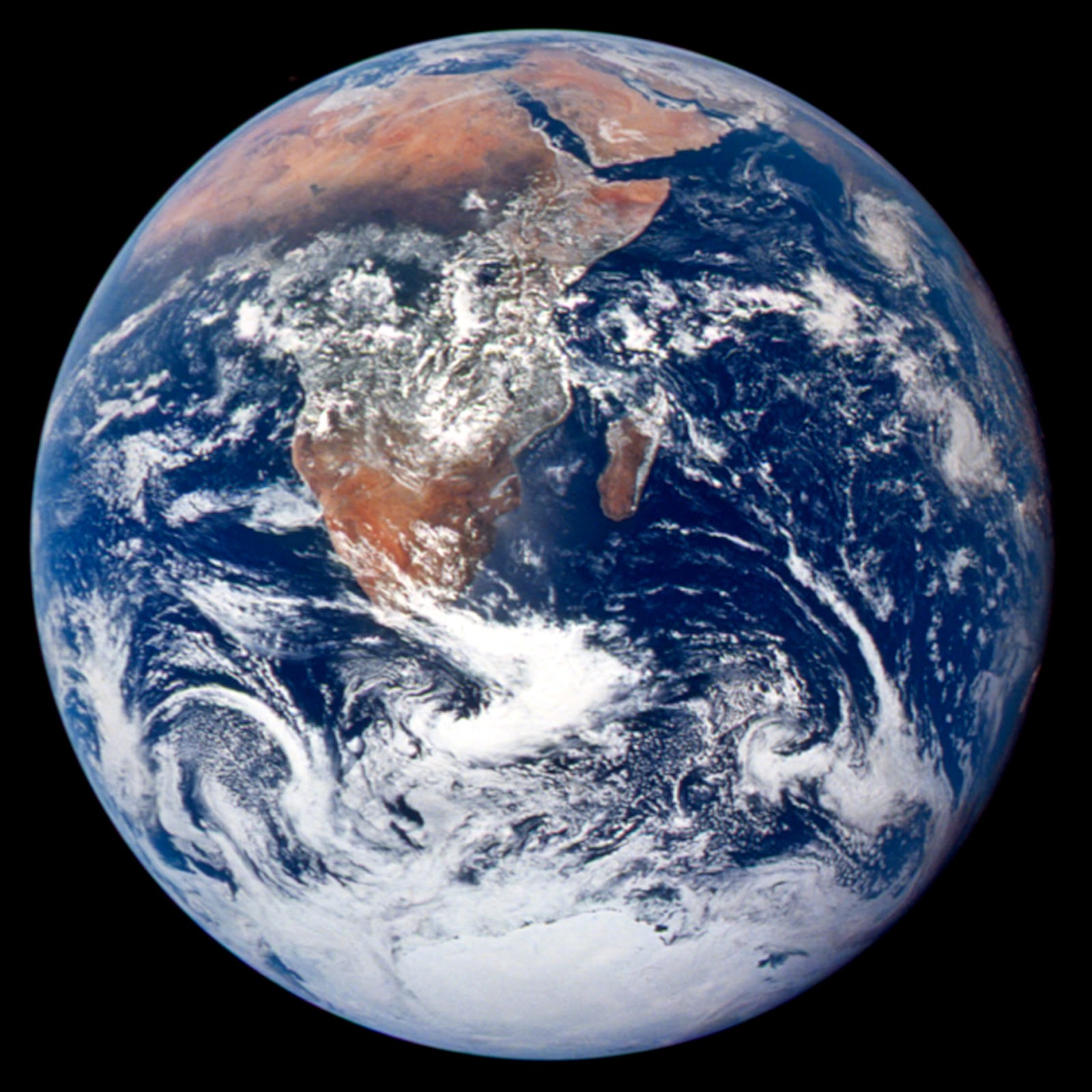
This blog was created to Plan the Planet. It is a work in progress - please click here if you wish to propose changes or additions or ask q...
-
This blog was created to Plan the Planet. It is a work in progress - please click here if you wish to propose changes or additions or ask q...
-
Major European cities overlaid on North America, corrected for the identical latitude ( click to view full sized ): North American cities,...
-
 Pete Pointner FAICP, ALA, ITE is publishing a new blog. A wealth of material for planners. Click to view the blog: www.petepointner.com NEED...

