|
Articles from Planetizen
Who really runs Wikipedia?
 I love Wikipedia and use it all the time. The article from the Economist below is interesting.
"Wikipedia advertises itself as a bias-free encyclopaedia which allows any internet denizen to contribute well-sourced facts or modify existing entries. In reality, however, the site has only about 35,000 English-language and 70,000 total active editors (as every contributor is known). With few exceptions, any visitor may edit the text of an entry so long as he follows the formatting, style and editorial form. Changes typically appear immediately, but modifications or entire entries may be rejected by other editors. That in turn may lead to consensus-driven votes and lengthy discussions. A common point of contention is whether a topic or person doesn't meet Wikipedia's detailed test for "notability". Editors who register an account, and who contribute regularly and in a manner that conforms to the nature of Wikipedia, gain implicit authority. Some editors become "administrators"—about 1,400 are at the moment—able to freeze or delete entries. Administrators have a big technical stick to ensure that when "edit wars" erupt or inappropriate changes are continuously applied, they can prod or truncheon users. Users may be banned or put under strictures, while administrators themselves can have their actions overridden by any of the 41 demiurges known as "stewards", a 12-member Olympian arbitration counsel, or the site's founder and chief deity, Jimmy Wales."
| The Economist explains | |
Who really runs Wikipedia? | |
|
Chicago Photos
Chicago!!! A trip through Chicago History, from the late 1890's . . . through the 60's, with some great pictures of Riverview Park. Don't miss the 1893 Ferris Wheel. I've not seen anything like this ever before. Built for the Chicago 's World's Fair.
Check out Oak Street Beach in 1915 . . . hardly any buildings on Lake Shore Drive !

First Airmail Flight - Grant Park - 1918
Copyright 2005 David R. Phillips


Comprehensive Plan Sarasota, Florida 1925
Very interesting to look at an old Comprehensive Plan, in this case the plan for Sarasota, Florida prepared in 1925.
We have come a long way, baby.
..
..
Keenly appreciating the need of expert technical advice, the newly created City Planning Commission recommended, and the City Council employed Mr. John Nolen. The work was rushed by Mr. Nolen and the accompanying report and maps have been accepted.
It is of course not possible in any City to carry out plans in all their details. A site for a Court House having been secured by the County Commissioners at the time these plans were being completed, a rearrangement of our Civic Center becomes necessary. It may be found advisable to make other changes as the building of a larger City progresses, but the importance of carrying through the main features of the plans, cannot be questioned if the best in efficiency, convenience, comfort, and pleasure is to be secured for our citizens and guests.
This report has been accepted by the city government and the work undertaken with confidence of the support and cooperation of our citizens.
We have come a long way, baby.
. . COMPREHENSIVE CITY PLAN . SARASOTA, FLORIDA ... .....  . .... JOHN NOLEN, CITY PLANNER PHILIP W. FOSTER, ASSOCIATE 1925 . |
REPORT ON COMPREHENSIVE CITY PLAN FOR SARASOTA, FLORIDA . Based on the Planning Survey and Existing Conditions Map previously prepared and submitted JOHN NOLEN, City Planner PHILIP W. FOSTER, Associate HARVARD SQUARE, CAMBRIDGE, MASS. 1925 .. .. |
..
..
 .... |
THE BAY FRONT OF SARASOTA ..The attractiveness of this spot drew the original settlers, and today it is still the City's greatest asset |
....
STATEMENT BY CITY PLANNING COMMISSION
..
..
STATEMENT BY CITY PLANNING COMMISSION
..
..
 | HE phenomenal growth of Sarasota, which began in 1923 and was well under way early in 1924, brought into prominence various problems of City building which should be faced by every growing community. The traffic problem, always a serious one, must be considered, parks and playgrounds must be provided; |
| locations for public buildings must be secured, and a zoning plan laid out. | |
Keenly appreciating the need of expert technical advice, the newly created City Planning Commission recommended, and the City Council employed Mr. John Nolen. The work was rushed by Mr. Nolen and the accompanying report and maps have been accepted.
It is of course not possible in any City to carry out plans in all their details. A site for a Court House having been secured by the County Commissioners at the time these plans were being completed, a rearrangement of our Civic Center becomes necessary. It may be found advisable to make other changes as the building of a larger City progresses, but the importance of carrying through the main features of the plans, cannot be questioned if the best in efficiency, convenience, comfort, and pleasure is to be secured for our citizens and guests.
This report has been accepted by the city government and the work undertaken with confidence of the support and cooperation of our citizens.
..
....
..
....
..
- HARRY SAWYER, Chairman
JAMES O. GARDNER
J. V. KEEN
..
....
..
Sarasota, Florida, February 21, 1925.....
..
..
....
..
REPORT ON PLANNING PROPOSALS AND ZONING
....
..
REPORT ON PLANNING PROPOSALS AND ZONING
Click below to read the complete plan
Interesting Article in the Atlantic on Cities
The Coming Bold Transformation of the American City

MORE FROM THE URBAN LAND INSTITUTE:
In 40 years, 2.7 billion more people will live in world cities than do now, according to the United Nations Department of Economic and Social Affairs. Urban growth in China, India, and most of the developing world will be massive. But what is less known is that population growth will also be enormous in the United States.
The U.S. population will grow 36 percent to 438 million in 2050 from 322 million today. At today’s average of 2.58 persons per household, such growth would require 44.9 million new homes. However American households are getting smaller. If one were to estimate 2.2 persons per household—the household size in Germany today and the likely U.S. size by 2050—the United States would need 74.3 million new homes, not including secondary vacation homes. This means that over the next 40 years, the United States will build more homes than all those existing today in the United Kingdom, France, and Canada combined. Urban planner and theorist Peter Calthorpe predicts that California alone will add 20 million people and 7 million households by 2050.
To meet this demand, completely new urban environments will have to be created in the United States. Where and how will the new American homes be built? What urban structures are to be created?


Battery Park City in Manhattan exemplifies how the quality of urban life can be enhanced by replacing waterfront roadways with parks or pedestrian infrastructure. (Left); A "highway" for pedestrians, bicycles, and transit on Jiménez Avenue in Bogotá, Colombia. (Right) Photo courtesy of Enrique Peñalosa.
It is unlikely that city building on the scale to be seen through 2050 will happen ever again. Cities are a means to a way of life: the kind of urban structures created over the next few decades will have profound consequences in terms of quality of life, environmental sustainability, economic well-being, and even happiness and the civilization for hundreds of years to come. If we consider the influence American cities will exert on the rest of the world, the way they are built will determine, as well, much of the world’s sustainability and well-being.
Until today, the United States’ main legacy for the urban world has been low-density suburbs, which, most agree, have many shortcomings in terms of the environment and quality of life. The inadequacies of the suburbs are well known. They are high-energy-use environments: homes are large and thus consume much energy for cooling and heating; occupants’ mobility is dependent on the automobile; distances to reach jobs, shops, and recreation areas are long; and low-cost and high-frequency public transport is not viable in such a low-density environment. Suburbs severely restrict the mobility of vulnerable citizens—youngsters, the poor, and the very old—who usually lack access to a car. Because most destinations are unreachable on foot, suburban public spaces tend to be devoid of people—making them boring in their almost eerie silence interrupted only by the sound of cars that sporadically zoom by or lawnmowers with their maddening engines. Suburbs are not propitious for diversity: Russian literature courses or Afghan restaurants require high concentrations of people nearby from which to draw the small percentage who are interested.
Despite the ills of the suburbs, most Americans do not want to live in a Manhattan-like environment either. So, what should the third-millennium American city be like?
The Urbanophile: The 2012 Year in Unemployment
The Urbanophile recently looked at the changes in jobs in metro areas for 2012. Here’s a follow-on look at unemployment. First a look at the national unemployment rate picture, which has improved remarkably.  2012 Unemployment Rate by County To put this in perspective, here’s the corresponding map for 2009:  2009 Unemployment Rate by County |
Futurist David Houle

Houle is consistently ranked as one of the top futurists and futurist keynote speakers on the major search engines. He has keynoted numerous conferences across the country and internationally. In the last three years he has delivered keynotes or 6 continents and 12 countries.
He is regularly invited to speak at corporate management retreats. Houle won a Speaker of the Year award from Vistage International, the leading organization of CEOs in the world. He is often called the “CEOs’ futurist” having spoken to or advised 2,000+ CEOs and business owners in the past four years.

He is the author of "The Shift Change". He writes the highly regarded futurist blog evolutionshift.com with the tag line “A Future Look At Today.” For those of you on Twitter his user name is evolutionshift, which is also the name of his YouTube channel. He publishes the free Shift Age Newsletter, available at davidhoule.com/newsletter.
In February 2010 Houle became a featured contributor on Oprah.com, oprah.com/davidhoule. He is Futurist in Residence and faculty member at the Ringling College of Art + Design. He lives in Chicago and Sarasota.
Subscribe to:
Posts (Atom)
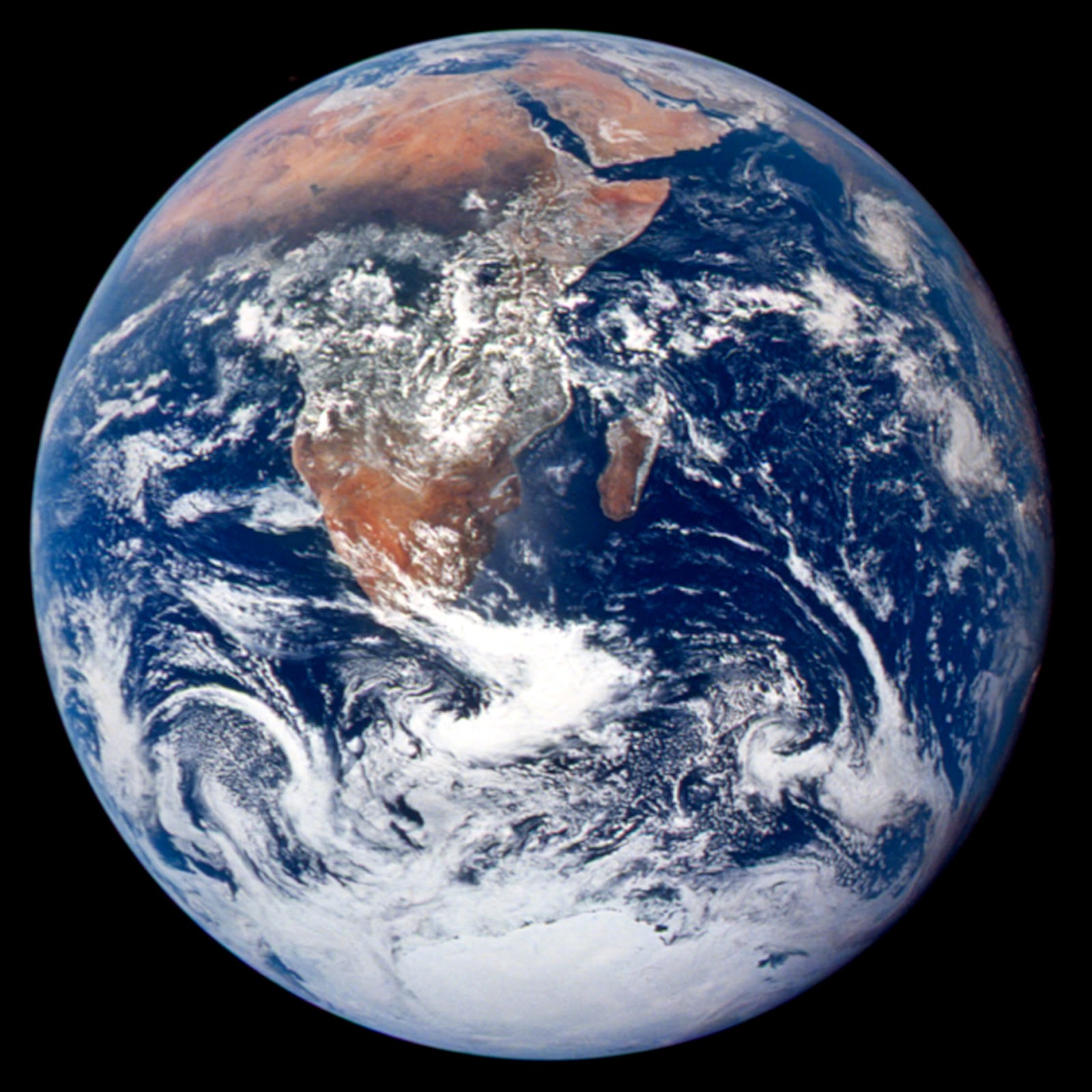
This blog was created to Plan the Planet. It is a work in progress - please click here if you wish to propose changes or additions or ask q...
-
This blog was created to Plan the Planet. It is a work in progress - please click here if you wish to propose changes or additions or ask q...
-
Major European cities overlaid on North America, corrected for the identical latitude ( click to view full sized ): North American cities,...
-
 Pete Pointner FAICP, ALA, ITE is publishing a new blog. A wealth of material for planners. Click to view the blog: www.petepointner.com NEED...

