Roundabouts


Very interesting set of videos discussing Roundabouts by my friend and neighbor H. Wayne Wilson on At Issues.


Roundabouts in Carmel, Indiana
"Roundabouts #1"
Episode #120601
Air Date: 06/2012
Length: 1:47
With Peoria building five roundabouts, At Issue in Brief has a four part series looking at how Carmel, Indiana built eighty roundabouts and what the benefits were for the community.
Guests:
  • Jim Brainard – Mayor of Carmel, Indiana
  • Jim Lease – Resident of Carmel, Indiana

Joe Hudson – Peoria Traffic Commission Chair
"Roundabouts #2"
Episode #120602
Air Date: 06/2012
Length: 1:51
With Peoria building five roundabouts, At Issue in Brief has a four part series looking at how Carmel, Indiana built eighty roundabouts and what the benefits were for the community.
Guests:
  • Z. Davis Coots – Resident of Carmel, Indiana
  • Jim Brainard – Mayor of Carmel, Indiana
  • Michael McBride – City Engineer of Carmel, Indiana

Joe Hudson – Peoria Traffic Commission Chair
"Roundabouts #3"
Episode #120603
Air Date: 06/2012
Length: 2:08
With Peoria building five roundabouts, At Issue in Brief has a four part series looking at how Carmel, Indiana built eighty roundabouts and what the benefits were for the community.
Guests:
  • Jim Ardis - Mayor of Peoria, Illinois
  • Joe Hudson – Peoria Traffic Commission Chair
  • Andrew Irving – Peoria Resident

Roundabouts in Carmel, Indiana
"Roundabouts #4"
Episode #120604
Air Date: 06/2012
Length: 2:36
With Peoria building five roundabouts, At Issue in Brief has a four part series looking at how Carmel, Indiana built eighty roundabouts and what the benefits were for the community.
Guests:
  • Jim Brainard – Mayor of Carmel, Indiana
  • Michael McBride – City Engineer of Carmel, Indiana
  • Melanie Anderson – Peoria Division Chief of Fire Prevention
  • Z. Davis Coots – Resident of Carmel, Indiana


Munster, Indiana Improvements

Munster Indiana is a high quality community and part of the Chicago metropolitan area. The Town has substantially improved over the years.


The photo below is of an old quarry that the Town has expanded into a very attractive park.


The Town has developed an extensive bikeway system throughout the community.


The adjacent landfill has been repurposed into a Municipal golf course.


Munster, Indiana Streetscape Improvements


I was the Town planning consultant for a number of years. It is great to see the Town making so many substantial improvements.

Congratulations to all those who made them happen.


More Housing Photos of Mt Greenwood


Photos of Mt Greenwood in the southwest corner of Chicago. The neighborhood has seen substantial investment in housing, in part because city workers are required to live in the City and it is seen as a desirable and safe neighborhood. A typical expansion is to build a second or third story on top of the original one story home.


The bungalows on the right were the original homes. The large single family to the left are replacement homes.


Second stories added to the original one story home.


My parents home above.  The home below was owned by the parents of a friend of mine. Notice how the appearance was dramatically changed with the new front construction.


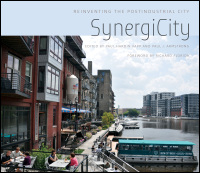
SynergiCity Reinventing the Postindustrial City


Revitalizing Rust Belt cities into vibrant urban centers


SynergiCity: Reinventing the Postindustrial City proposes a new and invigorating vision of urbanism, architectural design, and urban revitalization in twenty-first-century America. Culling transformative ideas from the realms of historic preservation, sustainability, ecological urbanism, and the innovation economy, Paul Hardin Kapp and Paul J. Armstrong present a holistic vision for restoring industrial cities suffering from population decline back into stimulating and productive places to live and work.

With a particular emphasis on the Rust Belt of the American Midwest, SynergiCity argues that cities such as Detroit, St. Louis, and Peoria must redefine themselves to be globally competitive. This revitalization is possible through environmentally and economically sustainable restoration of industrial areas and warehouse districts for commercial, research, light industrial, and residential uses. The volume's expert researchers, urban planners, and architects draw on the redevelopment successes of other major cities--such as the American Tobacco District in Durham, North Carolina, and the Milwaukee River Greenway--to set guidelines and goals for reinventing and revitalizing the postindustrial landscape.

Contributors are Paul J. Armstrong, Donald K. Carter, Lynne M. Dearborn, Norman W. Garrick, Mark L. Gillem, Robert Greenstreet, Craig Harlan Hullinger, Paul Hardin Kapp, Ray Lees, Emil Malizia, John O. Norquist, Christine Scott Thomson, and James H. Wasley.

"Instead of handing over neighborhoods to city hall or private developers, this book shows that the solution to many cities' plights lies within them. Empowering residents to take control of and build on community assets, engaging them in community-based organizations that can spearhead revitalization and build real quality of place, yields real results. To the extent that they adopt a holistic approach to planning and build on a city's intrinsic strengths, they can accomplish miracles."--from the foreword by 

Richard Florida

"This timely and approachable collection provides meaningful case studies and a wealth of topics for discussion in urban studies and redevelopment. Professionals and students in urban planning, government, and urban development will find this volume greatly interesting."--Robert M. Lau, associate editor of the Council on Tall Buildings and Urban Habitat Journal

Paul Hardin Kapp is the author of The Architectural Odyssey of William Nichols: Building the South in North Carolina, Alabama, and Mississippi. Paul J. Armstrong is the curator of the exhibit "Space, Movement, and Light" at Space Gallery in Chicago. They are both associate professors of architecture at the University of Illinois at Urbana-Champaign.

Mt Greenwood (South Side Chicago) Housing


The school above is the Mt. Greenwood Elementary School in the far southwest side of Chicago. I graduated from Mt. Greenwood in 1962.

The following shots are housing on the perimeter of the school.


An older home north of the school.


Many of the homes were and are modest bungalows and cape cod.  Homes.  A typical 50's family would have raised four children in these homes. These homes would range from 2 to 3 bedrooms and perhaps 800 feet on the first floor. Some of them had a second floor for an additional 400 feet.


A nicer cape cod home included dormer windows to open up the second floor.


There has been significant investment in homes in Mt Greenwood.  A typical improvement would add a full second level to the original cape cod, often cantilevering over the first floor to pick up additional space.


Another nice improvement is the addition of large front porches to replace the original "stoop".


The home above adds a full second story and the front porch.


The home above illustrates an original brick bungalow on the right and a bungalow with a full second story added on the left.


The school has recently been substantially improved with a large addition and improved playground equipment. When we were there in the 1950's the playground was a large gravel lot with no equipment. Of course we also had to walk 3 miles uphill each way to school in blizzard conditions.


The front porch and flower baskets are a nice touch.


Mt Greenwood is somewhat unique in the south side of Chicago. Many City of Chicago employees are required to live in the City.  A large number of Police and Firemen have chosen Mt. Greenwood, which helps stabilize the community and maintain high property values.


Housing price on Zillow for the brick cape cod home below at 10900 and Trumbull near the Mt Greenwood School:


http://www.zillow.com/homedetails/10900-S-Trumbull-Ave-Chicago-IL-60655/4083881_zpid/ 


The graph below is from Zillow.com and shows housing values. Like much of the rest of the United States bubble values peaked in 2007 and have declined since that time.


Chicago


Great Article in the Urbanophile about Chicago.


"Today I want to look at the other side of my last piece, namely the strengths Chicago has today. If you think about the current challenges in comparison to the ones in the 70s and early 80s, well, there is no comparison. Back then, in an era when big cities were in decline across the board, it wouldn’t have been unreasonable to think that Chicago could head the direction of Detroit. Today that seems like a remote possibility given that there are so many strengths that the city has to partially offset its demographic and economic weakness."


This blog was created to Plan the Planet. It is a work in progress - please click here if you wish to propose changes or additions or ask q...